What Happens During Dialysis: How the Body Adapts to Rapid Fluid and Solute Shifts
When a patient starts haemodialysis, the body is pushed into one of the most extreme physiological transitions in medicine. In just a few hours, litres of fluid are removed and blood chemistry is actively reshaped. The body is forced to adapt in real time.
1. Rapid Fluid Removal and Circulatory Stress
Dialysis removes fluid through ultrafiltration. This reduces plasma volume directly.
Fluid is being removed from the bloodstream faster than it can refill from tissues. Normally, fluid shifts from the interstitial space back into the vasculature. In dialysis patients, this refill rate is often impaired due to vascular stiffness, low albumin, or chronic illness.
The result is falling effective circulating volume.
2. Osmotic Shifts and Cellular Stress
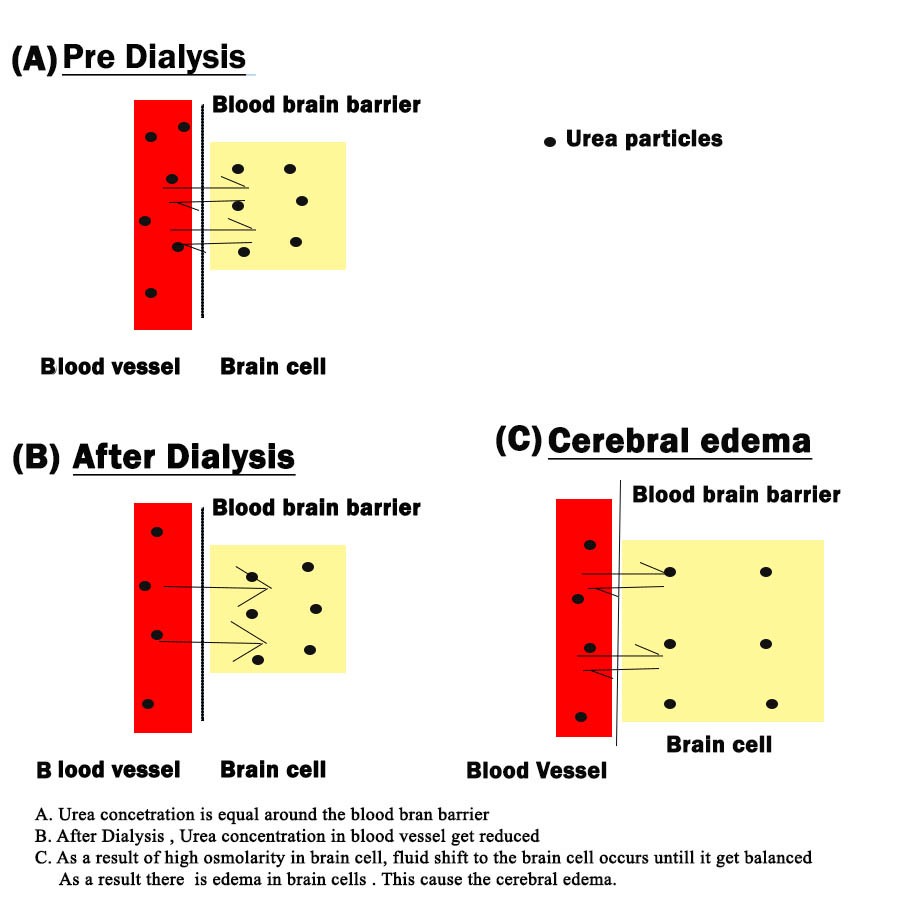
Dialysis rapidly changes solute concentrations, especially urea.
Before dialysis, urea is high in both blood and tissues. During dialysis, blood urea falls quickly, but intracellular urea lags behind.
This creates an osmotic gradient.
Water moves into cells, including brain cells. In extreme cases, this leads to dialysis disequilibrium syndrome. Even in milder forms, patients experience headaches, nausea, or fatigue.
3. Electrolyte Rebalancing and Cardiac Instability
Electrolytes shift rapidly during dialysis.
A rapid drop in potassium can increase arrhythmia risk. Calcium shifts influence myocardial contractility. Bicarbonate correction alters pH, which affects enzyme activity and oxygen delivery.
The heart is constantly adapting during dialysis. In vulnerable patients, this adaptation is not stable.
4. Vascular Refilling: The Hidden Bottleneck
One of the most important and underappreciated processes is vascular refilling.
If refilling is slow and ultrafiltration is fast, the system collapses.
This is the central mechanism behind many dialysis complications.
More News